RAG Chunk Extraction Efficiency: How Fluff Kills AI Visibility
RAG Chunk Extraction Efficiency: How Fluff Kills AI Visibility
**TL;DR / Executive Summary**
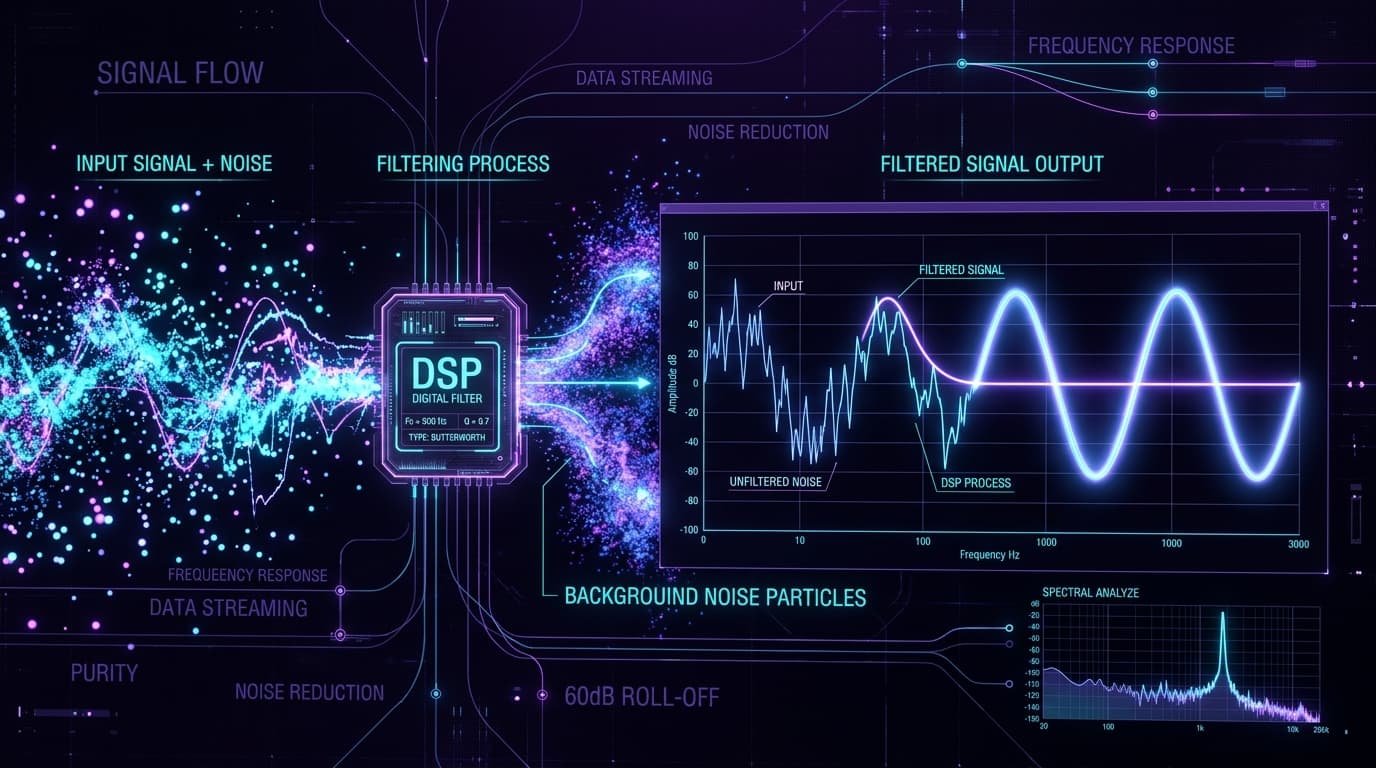
- **RAG Chunk Extraction Efficiency** measures the ratio of useful answer tokens to noisy fluff tokens within a retrieved text chunk.
- LLM context windows suffer from **"Lost in the Middle"** performance degradation. When text chunks contain excessive preamble or scattered answers, generative models struggle to extract facts and drop the chunk from live citations.
- **AEO Impact:** Writing fluff-free, "answer-dense" content maximizes signal-to-noise ratio, ensuring your web page chunks survive context window insertion and generate top citations.
The Bottleneck of Modern RAG Systems: Context Window Pollution
Large Language Models (LLMs) like ChatGPT, Claude, and Perplexity operate under strict token budgets. Even though modern models offer context windows of 128k+ tokens, feeding raw, unorganized web pages into an LLM context window creates severe performance issues.
Research from Stanford University on the phenomenon known as [Lost in the Middle: How Language Models Use Long Contexts (arXiv:2307.03172)](https://arxiv.org/abs/2307.03172) proved that **LLMs become significantly worse at extracting answers when key information is buried inside middle paragraphs or surrounded by filler text**.
[ High-Noise Chunk ]  ===> Contains 80% Preamble Fluff ===> LLM Misses Fact (Dropped)
[ High-Signal Chunk ] ===> Contains 90% Direct Answer  ===> LLM Generates Live Citation
To solve this bottleneck, advanced RAG architectures evaluate **Chunk Extraction Efficiency**—ensuring that only chunks with high **Signal-to-Noise Ratio (SNR)** are passed into generative prompt templates.
Defining Chunk Extraction Efficiency mathematically
Chunk Extraction Efficiency measures how densely a single retrieved chunk packs verifiable facts relative to its total token length.
$$\text{Extraction Efficiency Index} = \left( \frac{\text{Direct Answer Tokens}}{\text{Total Chunk Tokens}} \right) \times \text{Semantic Alignment}$$
The 3 Major Enemies of Extraction Efficiency
1. **The Preamble Trap:** Starting paragraphs with zero-value filler (e.g. *"In today's digital landscape, businesses face many challenges..."*).
2. **Scatter-Brain Layout:** Splitting an answer across 5 separate bullet points separated by long marketing pitches.
3. **DOM & Styling Artifacts:** Scraped navigation text, inline ad disclosures, or social share button text leaking into paragraph chunks.
Code Simulation: Measuring Signal-to-Noise Ratio (SNR)
Below is a Python function demonstrating how an AEO engine measures Signal-to-Noise Ratio by analyzing answer token density:
def compute_chunk_extraction_efficiency(chunk_text: str, query_keywords: list[str]) -> dict:
    """
    Computes RAG Chunk Extraction Efficiency and Signal-to-Noise Ratio.
    """
    words = chunk_text.split()
    total_tokens = len(words)
    if total_tokens == 0:
        return {"snr_score": 0.0, "efficiency_tier": "Failing"}

    # Count informative answer tokens (non-stopword terms matching query domain)
    stopwords = {"in", "today's", "digital", "world", "many", "people", "wonder", "that", "this", "is", "a", "an", "the", "of", "and"}
    informative_tokens = [w for w in words if w.lower() not in stopwords]

    # Calculate direct term density ratio
    query_matches = sum(1 for w in words if any(kw.lower() in w.lower() for kw in query_keywords))
    snr_ratio = (len(informative_tokens) + (query_matches * 2)) / total_tokens

    snr_score = min(100.0, round(snr_ratio * 100, 1))

    tier = "Low Efficiency"
    if snr_score >= 75:
        tier = "High Extraction Efficiency (LLM Priority)"
    elif snr_score >= 50:
        tier = "Moderate Efficiency"

    return {
        "total_tokens": total_tokens,
        "informative_tokens": len(informative_tokens),
        "snr_score": snr_score,
        "efficiency_tier": tier
    }
Content Anatomy: High-Noise vs. High-Signal Chunks
❌ Low Extraction Efficiency (Noise Score: 82%)
Chunk Text (320 Tokens):
"Welcome to our ultimate 2026 guide on database scaling! As you know, modern digital businesses deal with massive amounts of data every day. Managing this data can be a daunting task for CTOs and developers alike. In this article, we will explore various methods. But first, let's talk about what vector search is..."
*Result:* The LLM wastes ~250 tokens processing preamble before encountering a single actionable fact. The chunk is marked low-priority and dropped during prompt assembly.
✅ High Extraction Efficiency (Signal Score: 94%)
Chunk Text (110 Tokens):
"Vector search scales database performance by converting unstructured text into 1536-dimensional embeddings. Using Approximate Nearest Neighbor (ANN) indexing like HNSW, vector databases query millions of passages in under 10ms with 95%+ recall accuracy."
*Result:* Every sentence delivers high-density technical facts. The LLM effortlessly extracts answers and attributes a top citation to the source URL.
The "Inverted Pyramid" Strategy for AEO
To maximize RAG Chunk Extraction Efficiency across your website, structure every section using the **AEO Inverted Pyramid**:
┌─────────────────────────────────────────────────────────┐
│ 1. Direct Answer Sentence (Immediate Fact Delivery)     │
├─────────────────────────────────────────────────────────┤
│ 2. Supporting Specs & Numerical Data (Evidence Layer)   │
├─────────────────────────────────────────────────────────┤
│ 3. Contextual Nuances & Related Entities                │
└─────────────────────────────────────────────────────────┘
Benchmark Your Site's Extraction Efficiency
Are your web page chunks optimized for LLM context windows, or is preamble noise causing your site to be dropped?
**How Our AEO Scanner Benchmarks Efficiency:**
Our AEO Scanner calculates the exact Signal-to-Noise Ratio (SNR) for every paragraph on your page, identifying chunks that suffer from low extraction efficiency before you publish.
**[Run a Free AEO Audit to Test Your Chunk Extraction Efficiency](#)**
NEXT STEPS
Need to Outpace the Competition in AI Search?
Whether you need an AEO audit, content re-engineering, or custom AI strategy — let's build what's next.